This is not to say "I am" or "I am not", it is to give no
thoughts to self but all to God. Let one say, "What would
God have me say, what would God have me think, what
would God have me do?" But even this is unnecessary for
there is always a feeling of ease if not of joy, when one
practices Darood -- to harmonize all action, speech and
thought with the breath. This is easy, simple and sufficient,
and for it no knowledge of metaphysics is necessary.
Sufi Ahmed Murad Chisti
Wednesday, October 25, 2006


Tuesday, October 24, 2006

If it is not too dark,
Go for a walk, if it is not too dark.
Get some fresh air, try to smile.
Say something kind
To a safe-looking stranger, if one happens by.
Always exercise your heart's knowing.
You might as well attempt something real
Along this path:
Take your spouse or lover into your arms
The way you did when you first met.
Let tenderness pour from your eyes
The way the Sun gazes warmly on the earth.
Play a game with some children.
Extend yourself to a friend.
Sing a few ribald songs to your pets and plants -
Why not let them get drunk and wild!
Let's toast
Every rung we've climbed on Evolution's ladder.
Whisper, "I love you! I love you!"
To the whole mad world.
Let's stop reading about God -
We will never understand Him.
Jump to your feet, wave your fists,
Threaten and warn the whole Universe
That your heart can no longer live
Without real love!
~ Hafiz ~
Get some fresh air, try to smile.
Say something kind
To a safe-looking stranger, if one happens by.
Always exercise your heart's knowing.
You might as well attempt something real
Along this path:
Take your spouse or lover into your arms
The way you did when you first met.
Let tenderness pour from your eyes
The way the Sun gazes warmly on the earth.
Play a game with some children.
Extend yourself to a friend.
Sing a few ribald songs to your pets and plants -
Why not let them get drunk and wild!
Let's toast
Every rung we've climbed on Evolution's ladder.
Whisper, "I love you! I love you!"
To the whole mad world.
Let's stop reading about God -
We will never understand Him.
Jump to your feet, wave your fists,
Threaten and warn the whole Universe
That your heart can no longer live
Without real love!
~ Hafiz ~
(I Heard God Laughing - Renderings of Hafiz by Daniel Ladinsky)
The Heat of Midnight Tears

By Mirabai
(1498 - 1565?)
English version by Robert Bly
Listen, my friend, this road is the heart opening,
Kissing his feet, resistance broken, tears all night.
If we could reach the Lord through immersion in water,
I would have asked to be born a fish in this life.
If we could reach Him through nothing but berries and wild nuts,
Then surely the saints would have been monkeys when they came from the womb!
If we could reach him by munching lettuce and dry leaves,
Then the goats would surely go to the Holy One before us!
If the worship of stone statues could bring us all the way,
I would have adored a granite mountain years ago.
Mirabai says: The heat of midnight tears will bring you to God.
Sunday, October 22, 2006
Thursday, October 19, 2006
There is neither up nor down nor inside nor outside
nor without nor within. All there is is Consciousness.
And this manifestation is an appearance within that
Consciousness. And even that appearance is only an
objective expression of the same Consciousness. All
there is is Consciousness.
We are merely an instrument through which Consciousness is functioning.
~ Ramesh S. Balsekar
nor without nor within. All there is is Consciousness.
And this manifestation is an appearance within that
Consciousness. And even that appearance is only an
objective expression of the same Consciousness. All
there is is Consciousness.
We are merely an instrument through which Consciousness is functioning.
~ Ramesh S. Balsekar
Tuesday, October 17, 2006
Kindness
Before you know what kindness really is
you must lose things,
feel the future dissolve in a moment
like salt in a weakened broth.
What you held in your hand,
what you counted and carefully saved,
all this must go so you know
how desolate the landscape can be
between the regions of kindness.
How you ride and ride
thinking the bus will never stop,
the passengers eating maize and chicken
will stare out the window forever.
Before you learn the tender gravity of kindness,
you must travel where the Indian in a white poncho
lies dead by the side of the road.
You must see how this could be you,
how he too was someone
who journeyed through the night with plans
and the simple breath that kept him alive.
Before you know kindness as the deepest thing inside,
you must know sorrow as the other deepest thing.
You must wake up with sorrow.
You must speak to it till your voice
catches the thread of all sorrows
and you see the size of the cloth.
Then it is only kindness that makes sense anymore,
only kindness that ties your shoes
and sends you out into the day to mail letters and purchase bread,
only kindness that raises its head
from the crowd of the world to say
it is I you have been looking for,
and then goes with you every where
like a shadow or a friend.
~ Naomi Shihab Nye ~
(Words From Under the Words: Selected Poems)
you must lose things,
feel the future dissolve in a moment
like salt in a weakened broth.
What you held in your hand,
what you counted and carefully saved,
all this must go so you know
how desolate the landscape can be
between the regions of kindness.
How you ride and ride
thinking the bus will never stop,
the passengers eating maize and chicken
will stare out the window forever.
Before you learn the tender gravity of kindness,
you must travel where the Indian in a white poncho
lies dead by the side of the road.
You must see how this could be you,
how he too was someone
who journeyed through the night with plans
and the simple breath that kept him alive.
Before you know kindness as the deepest thing inside,
you must know sorrow as the other deepest thing.
You must wake up with sorrow.
You must speak to it till your voice
catches the thread of all sorrows
and you see the size of the cloth.
Then it is only kindness that makes sense anymore,
only kindness that ties your shoes
and sends you out into the day to mail letters and purchase bread,
only kindness that raises its head
from the crowd of the world to say
it is I you have been looking for,
and then goes with you every where
like a shadow or a friend.
~ Naomi Shihab Nye ~
(Words From Under the Words: Selected Poems)
Sunday, October 15, 2006
Friday, October 13, 2006
Thursday, October 05, 2006
Wednesday, October 04, 2006
Hymn

April 4, 1995 - October 4, 2004
By A. R. Ammons
By A. R. Ammons
(1926 - 2001)
I know if I find you I will have to leave the earth
and go on out
over the sea marshes and the brant in bays
and over the hills of tall hickory
and over the crater lakes and canyons
and on up through the spheres of diminishing air
past the blackset noctilucent clouds
where one wants to stop and look
way past all the light diffusions and bombardments
up farther than the loss of sight
into the unseasonal undifferentiated empty stark
And I know if I find you I will have to stay with the earth
inspecting with thin tools and ground eyes
trusting the microvilli sporangia and simplest
coelenterates
and praying for a nerve cell
with all the soul of my chemical reactions
and going right on down where the eye sees only traces
You are everywhere partial and entire
You are on the inside of everything and on the outside
I walk down the path down the hill where the sweetgum
has begun to ooze spring sap at the cut
and I see how the bark cracks and winds like no other bark
chasmal to my ant-soul running up and down
and if I find you I must go out deep into your
far resolutions
and if I find you I must stay here with the separate leaves
Isan said to Kyozan, "All of your Sutra studies are
useless, who is the one, who studies?"
Kyozan remained silent, and Isan yelled, "Get out,
and don't come back."
Kyozan gathered his belongings and was leaving
the temple, when Isan yelled, "Kyozan!"
When Kyozan turned his head, Isan said, "Who is this
who heard my call?"
On hearing this, Kyozan dropped his belongings and
walked away.
useless, who is the one, who studies?"
Kyozan remained silent, and Isan yelled, "Get out,
and don't come back."
Kyozan gathered his belongings and was leaving
the temple, when Isan yelled, "Kyozan!"
When Kyozan turned his head, Isan said, "Who is this
who heard my call?"
On hearing this, Kyozan dropped his belongings and
walked away.
Sunday, September 24, 2006
There is a reality even prior to heaven and earth,
Indeed, it has no form, much less a name;
Eyes fail to see it; it has no voice for ears to detect;
To call it Mind or Buddha violates its nature,
For then it becomes like a visionary flower
in the air;
It is not Mind, nor Buddha;
Absolutely quiet, and yet illuminating
in a mysterious way,
It allows itself to be perceived only by
the clear-eyed.
It is Dharma truly beyond form and sound;
It is Tao having nothing to do with words.
Wishing to entice the blind,
The Buddha has playfully let words
escape his golden mouth;
Heaven and earth are ever since filled
with entangling briars.
O my good worthy friends gathered here,
If you desire to listen
to the thundrous voice of the Dharma,
Exhaust your words, empty your thoughts,
For then you may come to recognize this
One Essence.
-=-Dai O Kokushi
Indeed, it has no form, much less a name;
Eyes fail to see it; it has no voice for ears to detect;
To call it Mind or Buddha violates its nature,
For then it becomes like a visionary flower
in the air;
It is not Mind, nor Buddha;
Absolutely quiet, and yet illuminating
in a mysterious way,
It allows itself to be perceived only by
the clear-eyed.
It is Dharma truly beyond form and sound;
It is Tao having nothing to do with words.
Wishing to entice the blind,
The Buddha has playfully let words
escape his golden mouth;
Heaven and earth are ever since filled
with entangling briars.
O my good worthy friends gathered here,
If you desire to listen
to the thundrous voice of the Dharma,
Exhaust your words, empty your thoughts,
For then you may come to recognize this
One Essence.
-=-Dai O Kokushi
Monday, September 18, 2006
What has to be given up
is not the I, as most mystics suppose:
this I is indispensable for any relationship,
including the highest,
which always presupposes an I and You.
What has to be given up is not the I
but that drive for self-affirmation
which impels man to flee
from the unreliable, unsolid, unlasting,
unpredictable, dangerous world of relation
into the having of things."
is not the I, as most mystics suppose:
this I is indispensable for any relationship,
including the highest,
which always presupposes an I and You.
What has to be given up is not the I
but that drive for self-affirmation
which impels man to flee
from the unreliable, unsolid, unlasting,
unpredictable, dangerous world of relation
into the having of things."
Saturday, September 16, 2006
All you need is to keep quietly alert,
enquiring into the real
nature of yourself.
This is the only way to peace.
The real exists and is of the nature
of witness-consciousness.
Of course it is beyond the witness,
but to enter it one must first
realize the state of pure witnessing....
The witness is the
reflection of the real in all its purity....
The state of witnessing is full of power.
There are no conditions to fulfill.
There is nothing to be done,
nothing to be given up.
Just look and remember whatever you
perceive is not you, nor yours.
It is there in the field of consciousness,
but you are not the field and its contents,
nor even the knower of the field. It is your
idea that you have to do things that entangle
you in results of your efforts-the motive,
the desire, the failure to achieve, the sense of
frustration- all this holds you back.
Simply look at whatever happens and know
that you are beyond it.
You need not get at it (Enlightenment),
for you are it. It will getat you, if you give
it a chance. Let go your attachment to the
unreal and the real will swiftly and smoothly
slip into its own.
Stop imagining yourself being or doing this
or that and the realization that you are the
source and heart of all will dawn upon
you. With this will come great love which is
not choice or predilection, nor attachment,
but a power which makes all things love - worthy
and lovable.
Discover all you are not. Body, feelings, thoughts,
ideas, time, space, being and not being, this or
that - nothing concrete or abstract you can point
out to is you. You must watch yourself
continuously - particularly your mind - moment
by moment, missing nothing. This witnessing is
essential for the separation of the self from the
not-self ........be aware of that state which is only,
simply being, without being this or that or the other.
Thoughts on Awareness by Nisargadatta Maharaj
enquiring into the real
nature of yourself.
This is the only way to peace.
The real exists and is of the nature
of witness-consciousness.
Of course it is beyond the witness,
but to enter it one must first
realize the state of pure witnessing....
The witness is the
reflection of the real in all its purity....
The state of witnessing is full of power.
There are no conditions to fulfill.
There is nothing to be done,
nothing to be given up.
Just look and remember whatever you
perceive is not you, nor yours.
It is there in the field of consciousness,
but you are not the field and its contents,
nor even the knower of the field. It is your
idea that you have to do things that entangle
you in results of your efforts-the motive,
the desire, the failure to achieve, the sense of
frustration- all this holds you back.
Simply look at whatever happens and know
that you are beyond it.
You need not get at it (Enlightenment),
for you are it. It will getat you, if you give
it a chance. Let go your attachment to the
unreal and the real will swiftly and smoothly
slip into its own.
Stop imagining yourself being or doing this
or that and the realization that you are the
source and heart of all will dawn upon
you. With this will come great love which is
not choice or predilection, nor attachment,
but a power which makes all things love - worthy
and lovable.
Discover all you are not. Body, feelings, thoughts,
ideas, time, space, being and not being, this or
that - nothing concrete or abstract you can point
out to is you. You must watch yourself
continuously - particularly your mind - moment
by moment, missing nothing. This witnessing is
essential for the separation of the self from the
not-self ........be aware of that state which is only,
simply being, without being this or that or the other.
Thoughts on Awareness by Nisargadatta Maharaj
Saturday, September 02, 2006
one's not half two
one’s not half two. It’s two are halves of one:
which halves reintegrating, shall occur
no death and any quantity; but than
all numerable mosts the actual more
minds ignorant of stern miraculous this every truth
beware of heartless them
(given the scalpel, they dissect a kiss;
or, sold the reason, they undream a dream)
one is the song which fiends and angels sing;
all murdering lies by mortals told make two.
Let liars wilt, repaying life they’re loaned;
We (by a gift called dying born) must grow
deep in dark least ourselves remembering
love only rides his year.
All lose, whole find
e. e. cummings
Wednesday, August 30, 2006
No personal, individual effort can possibly
lead to enlightenment. On the contrary, what
is necessary is to rest helpless in beingness,
knowing that we are nothing - to be in the
nothingness of the no-mind state in which
all conceptualizing has subsided into passive
witnessing. In this state whatever happens
will be not our doing but the pure universal
functioning to which we have relinquished
all control.
~ Ramesh S. Balsekar
lead to enlightenment. On the contrary, what
is necessary is to rest helpless in beingness,
knowing that we are nothing - to be in the
nothingness of the no-mind state in which
all conceptualizing has subsided into passive
witnessing. In this state whatever happens
will be not our doing but the pure universal
functioning to which we have relinquished
all control.
~ Ramesh S. Balsekar
Wednesday, August 16, 2006
The Place Where We Are Right
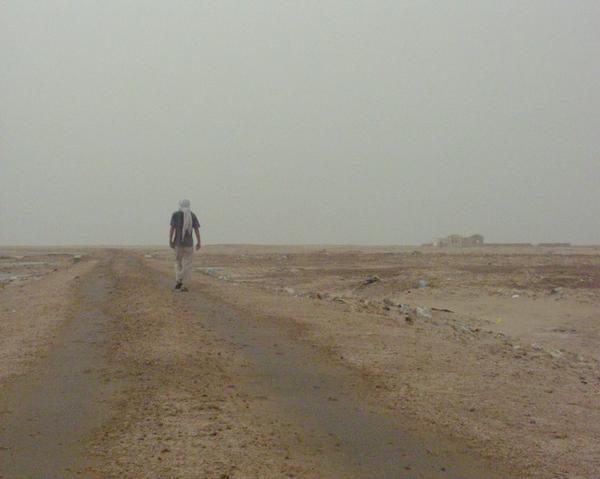
From the place where we are right
flowers will never grow
in the spring.
is hard and trampled
like a yard.
dig up the world
like a mole, a plow.
And a whisper will be heard in the place
where the ruined
house once stood.
~ Yehuda Amichai
Sunday, August 13, 2006
The lover of nature is the true worshipper of God.
Bowl of Saki, by Hazrat Inayat Khan
Commentary by Pir-o-Murshid Inayat Khan:
A true worshipper of God sees His presence in all
forms, and thus in respecting others he respects God.
It may even develop to such an extent that the true
worshipper of God, the Omnipresent, walks gently
on the earth, bowing in his heart even to every tree
and plant, and it is then that the worshipper forms
a communion with the Divine Beloved at all times,
when he is awake and when he is asleep.
Anyone who has some knowledge of mysticism and
of the lives of the mystics knows that what always
attracts the mystic most is nature. Nature is his bread
and wine. Nature is his soul's nourishment.
Nature inspires him, uplifts him and gives him the
solitude for which his soul continually longs. Every
soul born with a mystical tendency is constantly
drawn towards nature; in nature that soul finds its
life's demand, as it is said in the Vadan, 'Art is dear
to my heart, but nature is near to my soul'. ... Nature
does not teach the glory of God; it need not teach
this as nature itself is the glory of God. People wish
to study astrology and other subjects in order to
understand better, but if we study astrology then we
are sure to arrive at an interpretation which is given
by a man, whereas what we should read from nature
is what nature gives us and not what any book teaches
us.
There comes a time with the maturity of the soul when
every thing and every being begins to reveal its nature
to us. We do not need to read their lives. We do not
need to read their theories. We know then that this wide
nature in its four aspects is ever-revealing and that one
can always communicate with it, but that in spite of this
it is not the privilege of every soul to read it. Many souls
remain blind with open eyes. They are in heaven, but not
allowed to look at heaven; they are in paradise, but not
allowed to enjoy the beauties of paradise. It is just like
a person sleeping on a pile of gems and jewels. From the
moment man's eyes open and he begins to read the
book of nature he begins to live; and he continues to live
forever.
'There is One Holy Book, the sacred manuscript of nature,
the only scripture which can enlighten the reader.' Most
people consider as sacred scriptures only certain books
or scrolls written by the hand of man, and carefully
preserved as holy, to be handed down to posterity as
divinerevelation. Men have fought and disputed over the
authenticity of these books, have refused to accept any
other book of similar character, and, clinging thus to the
book and losing the sense of it have formed diverse sects.
The Sufi has in all ages respected all such books, and has
traced in the Vedanta, Zend-Avesta, Kabbala, Bible, Quran,
and all other sacred scriptures, the same truth which he
reads in the incorruptible manuscript of nature, the only
Holy Book, the perfect and living model that teaches the
inner law of life: all scriptures before nature's manuscript
are as little pools of water before the ocean.
To the eye of the seer every leaf of the tree is a page of
the holy book that contains divine revelation, and he is
inspired every moment of his life by constantly reading
and understanding the holy script of nature
Saturday, August 12, 2006
so what else are my senses not picking up?
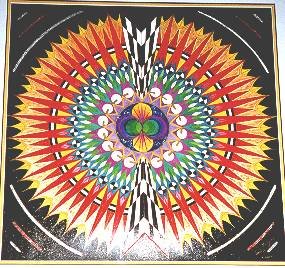
As you sleep your 8 hrs. a night, you, your bed, and the Earth go 536,000 miles around the sun. During that same time you, and the solar system traveled, 166 million miles around the galaxy. That is fast! 1/1000 of the speed of light. At a slighter more leisurely pace, you, and the galaxy drifted toward Andromeda at 80 miles per second, or roughly five millions miles in eight hours. All these, as space itself expands at 14 miles per second. Who says you're not going places! And yet, you don't feel a thing, only the serenity of an immobility which isn't there.
Pete S.
Thursday, August 10, 2006
Narrowness is primitiveness; it is the breadth of heart that proves
One person will do something and consider that there is great
wisdom in his sacrifice, while another who is not evolved
enough to understand it will say, 'How very foolish!' Remember
therefore that not only to the wise person the man of little
sense seems foolish, but even to the foolish person the wise
one seems foolish. The points of view of both are different:
one looks from the top of the tower, the other standing on
the ground. So there is a vast difference in the range of their
sight.
It is a man's outlook on life which makes him broad or narrow,
and it is the grade of his evolution which gives man the
illumination of sacrifice. What a man was not inclined to do
last year, he may be inclined to do this year; the sacrifice
one could not make yesterday, one can make today, for the
rate of speed of man's evolution cannot be limited to a
particular standard. A broad outlook enriches man and a high
point of view ennobles the soul.
Once you have linked yourself with love, a flood of inspiration
is revealed to you, whatever the subject, whatever the problem
in life may be. Whatever it be that your eye casts its glance
upon, it will disclose itself. Then you are on the real road, and
what a joy this is!
Breadth of heart is what is needed for all this. ... It is the
breadth of heart that makes a man great, whereas it is
narrowness of heart that makes him small. The great heart
does not think about how troublesome a person is, and why
he should be bothered like this. It is only the narrow of
heart that thinks, 'I will cause him some trouble.' It may
be justified, but still it is a narrow thought. The one with
a broad heart thinks,' This is a small thing, I can put up
with it; not much harm will come from it.'
The Nizam wrote this verse, 'The width of the land and the
water cannot be compared with the width of man's heart.
If man's heart is wide enough there is nothing greater than
that.' The heart becomes wide by forgetting the self, and
narrow by thinking of the self and by pitying one's self.
To gain a wide and broad heart you must have something
before you to look upon and to rest your intelligence upon,
and that something is the God ideal. This is the prescription
for killing the self, and to kill the self is the basis of every
religion.
Bowl of Saki, by Hazrat Inayat Khan
Commentary by Pir-o-Murshid Inayat Khan
wisdom in his sacrifice, while another who is not evolved
enough to understand it will say, 'How very foolish!' Remember
therefore that not only to the wise person the man of little
sense seems foolish, but even to the foolish person the wise
one seems foolish. The points of view of both are different:
one looks from the top of the tower, the other standing on
the ground. So there is a vast difference in the range of their
sight.
It is a man's outlook on life which makes him broad or narrow,
and it is the grade of his evolution which gives man the
illumination of sacrifice. What a man was not inclined to do
last year, he may be inclined to do this year; the sacrifice
one could not make yesterday, one can make today, for the
rate of speed of man's evolution cannot be limited to a
particular standard. A broad outlook enriches man and a high
point of view ennobles the soul.
Once you have linked yourself with love, a flood of inspiration
is revealed to you, whatever the subject, whatever the problem
in life may be. Whatever it be that your eye casts its glance
upon, it will disclose itself. Then you are on the real road, and
what a joy this is!
Breadth of heart is what is needed for all this. ... It is the
breadth of heart that makes a man great, whereas it is
narrowness of heart that makes him small. The great heart
does not think about how troublesome a person is, and why
he should be bothered like this. It is only the narrow of
heart that thinks, 'I will cause him some trouble.' It may
be justified, but still it is a narrow thought. The one with
a broad heart thinks,' This is a small thing, I can put up
with it; not much harm will come from it.'
The Nizam wrote this verse, 'The width of the land and the
water cannot be compared with the width of man's heart.
If man's heart is wide enough there is nothing greater than
that.' The heart becomes wide by forgetting the self, and
narrow by thinking of the self and by pitying one's self.
To gain a wide and broad heart you must have something
before you to look upon and to rest your intelligence upon,
and that something is the God ideal. This is the prescription
for killing the self, and to kill the self is the basis of every
religion.
Bowl of Saki, by Hazrat Inayat Khan
Commentary by Pir-o-Murshid Inayat Khan
Wednesday, August 09, 2006
As long as there is a 'you'
doing or not-doing, thinking or
not-thinking, meditating
or not-meditating you are
no closer to home than the
day you were born.
"The Tenth Man" by Wei Wu Wei
not-thinking, meditating
or not-meditating you are
no closer to home than the
day you were born.
"The Tenth Man" by Wei Wu Wei
One night while the Buddha was
meditating, a brilliant and beautiful
devata named Rohitassa appeared
in front of him. He told the Buddha,
"When I was a human being, I was
a spiritual seeker of great psychic
power, a sky walker. Even though I
journeyed for 100 years to reach
the end of the world, with great
determination amd resolution, I could
not come to the end ofthe world. I died on the joruney
before I found it. So can you tell me, is it possible to journey
to the end of the world?" And the Buddha replied, "It is not
possible to reach the end of the world by walking, but I tell
you unless you reach the end of the world,you will not reach
the end of suffering. "Rohitassa was puzzled and said, "Please explain
this to me, Venerable Sir." The Buddha replied, "In this very fathom-long
body is the world, the origin of the world, the cessation of the world, and the way leading to the cessation of the world."
(A 4.45, S 2.26)
In this instance, the Buddha used the exact formulation as
in the Four Noble Truths. The world, "loka", in this respect means the
world of our experience. And this is how the Buddha almost always
uses the term "the world". He's referring to the world as we experience it.
This includes
Sight
Sound
Smell
Taste
Touch
Thought
Emotion
Feeling
That's it. That's what "the world" is - my world, your
world. It's not the abstracted, geographical planet,
universe-type world, it's the direct experience of the
planet, the people, the cosmos. Here is the origin
of the world, the cessation of the world, and the
way leading to the cessation of the world. He said that
as long as we created "me and my experience" -"me in
here" and "the world out there" - then there is dukkha,
we're stuck in the world of subject and object. Geographically,
it's impossible to journey to the end of the world. It's only
when we come to the cessation of the world, which literally
means the cessation of its otherness, its thingness, will
we reach the end of dukkha, unsatisfactoriness. When we
stop creating sense objects as absolute realities and stop
seeing thoughts and feelings as solid things, there is
cessation. To see that the world is within our minds is one
way of working with these principles. The whole universe
is embraced when we realized that it's happening within
our minds. And that moment when we recognize that it all
happens HERE, it ceases. Its thingness ceases. Its
substantiality ceases. Its insubstantiality is known. We're not
imputing soidity to it, a reality it doesn't possess. We're just
looking directly at the world, knowing it fully and completely.
It all happens internally. When we stop creating the world
we stop creating each other. We stop imputing the sense of
solidity that creates a sense of separation. Yet we do not
cut off our senses in any way. Actually,we shed the veneer,
the films of confusion, of opinion, of judgment and conditioning
so that we can see the way things really are. At that moment
dukkha ceases.
There is knowing.
There is liberation.
There is freedom.
There is no dukkha.
-Amaro Bhikkhu
Tuesday, August 08, 2006
Evil wins when it scares us into killing evildoers.
In doing that, we think we're fighting evil, when in
reality, we're only dancing by its drum.
Evil can only be defeated by denying it the publicity,
the notoriety it seeks. The battle is over people's
minds, and must be won with ideas, not bullets.
Killing evildoers is transforming them into martyrs
and heroes. That always adds glamour to their
cause.
Evildoers are always a miniscule minority. The
number of victims they cause is always insignificant,
when compared to such accepted killers as car accidents.
Fear magnifies the danger they represent. We seldom
see any national campaign in favor of reducing car
accidents, or preventable deaths caused by lack
of hygiene in our hospitals. Yearly, those numbers are
consistently higher than deaths caused by evildoers
of all sorts.
Fight evil with ideas, not bullets. Evil becomes
contagious when blood is spilled in the name of Good.
Pete S.
In doing that, we think we're fighting evil, when in
reality, we're only dancing by its drum.
Evil can only be defeated by denying it the publicity,
the notoriety it seeks. The battle is over people's
minds, and must be won with ideas, not bullets.
Killing evildoers is transforming them into martyrs
and heroes. That always adds glamour to their
cause.
Evildoers are always a miniscule minority. The
number of victims they cause is always insignificant,
when compared to such accepted killers as car accidents.
Fear magnifies the danger they represent. We seldom
see any national campaign in favor of reducing car
accidents, or preventable deaths caused by lack
of hygiene in our hospitals. Yearly, those numbers are
consistently higher than deaths caused by evildoers
of all sorts.
Fight evil with ideas, not bullets. Evil becomes
contagious when blood is spilled in the name of Good.
Pete S.
Subscribe to:
Posts (Atom)