"From a Zen point-of-view, many [*spiritual seekers*,western AND eastern], have been handicapped by their concept of *god* as an objectified *supreme being*." [feel free to substitute *atman* ... any cosmological principle or deity ... or even *field of being* for the above.]
"Even when *in union with god*, they must automatically exclude that which is not-god. The dualistic split between oneness/manyness, being/non-being, life and death remains. [mere extensions of self/other. a picking & choosing.]
For Zen, the endpoint of man's journey is not *union with god* Zen insists there has never been a separation. All that is needed is the flash of insight that allows this to be seen.
~ source unknown ~ [other than my old dog-earred journal]
comments in [brackets] are mine.
i own them. ;) lol
but i'm willing to share ...
take them if you wish.
or not.
"ts"
Tuesday, April 26, 2005


Monday, April 25, 2005
EXCELLENT BLOGGING INTERVIEW IN...
In T View by Mister Ghost from Iraqi Bloggers Central of a 23 year old blogger from Sardinia, Stephania. Free Iran, pro USA, and with a "connectedness" world view, at heart her ultimate theme. However, her blog is all over the place, and truly a piece of art.
Also, Ali, a popular Iraq blogger hits a home run with his "Asking Few Questions Makes a Difference", questioning the lack of questioning in the Islamic world.
Also, Ali, a popular Iraq blogger hits a home run with his "Asking Few Questions Makes a Difference", questioning the lack of questioning in the Islamic world.
Sunday, April 24, 2005
SOMETHING FOR DAVID
KALI

Kali as the Supreme Deity
India (Himachal Pradesh, Chamba?)
Ca. 1800
Pigments on paper
6 7/8 x 10 7/8 in (17.4 x 27.6 cm)
This is a remarkable picture in that it not only unambiguously
demonstrates the supremacy of the goddess Kali but gives an
unusual form of the deity. She is seated on a throne in a
flowering green meadow. In the foreground flows the river
Ganga, which descends from the hair of Shiva, who forms one
leg of the golden throne. Wearing a snake as a necklace, Shiva
sits on an elephant skin. The other three legs of the
throne are formed by the figures of Vishnu with his usual
attributes, the four-headed Brahma, and Indra, with multiple
eyes on his body. Thus there is no doubt about who is in control.
The goddess herself shows some unusual features. She is, of course,
black like Kali but not beautiful. Her large, pendulous breasts, her
distinctive Afro hairdo, the tiny eyes, and the white crescent moon
outlining her face distinguish her from standard forms of Kali. She
also wears a yellow dhoti.
However, like Kali she wears a garland of severed heads and has
four arms with the same attributes, although they are disposed
in the reverse order. The severed head is in the upper right and
the sword in the lower, while the upper left hand exhibits the
gesture of charity and the lower that of assurance. At first sight,
the posture of the goddess seems unusual, but, in fact, it is the
classic position for giving birth and is encountered in early Indian
art in images of other iconographic forms of goddesses both in
India and Nepal. It is also the posture in which Kali sometimes
straddles Shiva, when he is supposed to be a corpse (sava),
the appropriate seat (asana) in heroic (virachara) tantric praxis.
All text and images © The Trustees of the Walters Art Gallery, Baltimore
Friday, April 15, 2005

Thursday, April 14, 2005
The Almanac of Last Things

From the almanac of last things
I choose the spider lily
for the grace of its brief
blossom, though I myself
fear brevity,
because the flesh
of those pomegranates
has survived
all the frost of dogma.
lessons of patience and despair--and
August, too sun-struck for lessons.
I choose a thimbleful of red wine
to make my heart race,
sleep. From the almanac
of last things I choose you,
as I have done before.
And I choose evening
to the window
is at its most reflective
just as it is ready
to go out.
Wednesday, April 13, 2005
Wisdom of the Country Cousin

Sometime in the early 1970's, two Buddhist masters met
in Cambridge, Massachusetts. One of them, Kalu Rinpoche,
was a renowned Tibetan meditation master who had spent
many years in solitary retreat in the remote mountain
caves of Tibet. The other was Seung Sahn, a Korean Zen
master who had recently come to the USA and was
supporting himself by working in a Providence, Rhode Island,
Laundromat, slowly planting the seeds of Zen in the minds
of those coming to wash their clothes.
At this now famous meeting of enlightened minds, Seung
Sahn held up an orange and, in classic Zen dharma combat
fashion, demanded,
“What is this?”
Kalu Rinpoche just looked at him, wonderingly.
Again Master Seung Sahn Asked, “What is this?”
Finally, Rinpoche turned to his translator and asked,
“Don’t they have oranges in Korea?”
(Source of story unknown.)
Monday, April 11, 2005
"Doesn't suffering season a person?"

"It's not the suffering that matters,
but a person's disposition,
for suffering can sweeten or embitter
for suffering can sweeten or embitter
just as the potter's fire
can char the clay or season it."
~ Anthony de Mello, S.J.
~ Anthony de Mello, S.J.
Sunday, April 10, 2005
THE GAME OF ENLIGHTENMENT
on the discovery of this interactive computer game called THE WILD DIVINE.
"Build stairways with your breath, open doors with meditation, juggle balls with your laughter, and so much more. The Journey makes biofeedback, a popular method of alternative healthcare, easily accessible and empowers you to take mind-body wellness, literally, into your own hands.
And from:
Deepak Chopra, M.D.
Author of the new release,
The Book of Secrets
"The Wild Divine is helping to transform our mass consciousness to one of peace and harmony through a very practical program that allows people to get in intimate touch with the innermost core of their being. To know that they have more power than they have ever realized, to know that they can influence what is happening in their body, in their mind, in their emotions, as well as in the world that they create everyday."
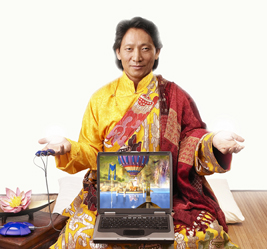
"Build stairways with your breath, open doors with meditation, juggle balls with your laughter, and so much more. The Journey makes biofeedback, a popular method of alternative healthcare, easily accessible and empowers you to take mind-body wellness, literally, into your own hands.
And from:
Deepak Chopra, M.D.
Author of the new release,
The Book of Secrets
"The Wild Divine is helping to transform our mass consciousness to one of peace and harmony through a very practical program that allows people to get in intimate touch with the innermost core of their being. To know that they have more power than they have ever realized, to know that they can influence what is happening in their body, in their mind, in their emotions, as well as in the world that they create everyday."

ALLEGORY OF THE CAVE
A summary of Plato's "Allegory of the Cave".
by Thang Xuan Nguyen
by Thang Xuan Nguyen
There is this cave where prisoners are kept, chained since childhood. It is dark down there, with only the light from a fire and an opening at the opposite end where the prisoners sit. The prisoners spend their days watching the shadows of passer-byers that are cast against the wall. This is all they get to see. And all they get to hear is the echo of the speech of the passer-byers. This is all they have of the truth, or reality. When suddenly they are released. One turns his head and sees the light and the causes of the shadows (which they originally thought was reality). He is confused and in pain from the intensity of the light. He now sees real existence. Perplexed still, he discovers the land above, the land of light. When he returns to the darkness, he is again disoriented (because he was used to the light above) and when he tries to explain the truth to the other cave dwellers, they see him as disoriented (mad) so persecutes and kills him. This is the allegory. The cave is the world where we, the prisoners, live. The chains are our restraint, or limitations to see the truth. The shadows are our illusions of reality. The ascent to light is reaching enlightenment, truth.
"What is the secret of your serenity?"
Said the Master,
"Wholehearted cooperation
with the inevitable."
~ Anthony de Mello, S.J.
"Wholehearted cooperation
with the inevitable."
~ Anthony de Mello, S.J.
Friday, April 08, 2005
A BOUNTIFUL SPRING HARVEST
Received an always welcomed email from a longtime friend recently, let's call him El Granjero, in which he mentioned a harvest. It took a moment for the connections to fall into place being the early part of April and not a time usually associated with harvest, then light bulb flash. You see my friend is an organic asparagus farmer in a beautiful valley on the western range of the Colorado Rockies and the sprouts of the asparagus plant are the product harvested for market in early Spring.
El Granjero is a highly evolved social progressive who arrived here in Santa Fe soon out of law school, opened a small law office, and very quickly became the head of a rapidly growing successful law firm.
In a profession held not always with the highest regards by the public, this young man quickly became a role model and hero in the community. His unabridged generosity of spirit, unheralded pro bono work, environmental activities and a heart as big as Texas drew people to him from across the spectrum in our town. A lawyer quoting the Dali Lama?
When the AIDS horror hit our small town, this straight man was there front row doing what ever was needed for who ever needed him in a time when only shame and fear were associated with the disease, long before wearing a red ribbon and shining at the charity balls became fashionable.
And in the midst of this success and acclaim the man who had it all seemed simply to pause in his early mid life, selling his law firm, scouting for land in Colorado, bought a farm and has been growing asparagus in a beautiful valley surrounded by like minded folks for the last few years.
And as most conventional farmers take a holiday after fall harvest, I hope my friend has a great and bountiful harvest, and perhaps here are some helpful ideas that he can use his up and coming midsummer holiday.
Wednesday, April 06, 2005
APRIL'S READING LIST
The Road to Oxiana
In 1933 Robert Byron began a journey through the Middle East via Beirut, Jerusalem, Baghdad, and Teheran to Oxiana--the country of the Oxus, the ancient name for the river Amu Darya which forms part of the border between Afghanistan and the Soviet Union. The Road to Oxiana offers not only a wonderful record of his adventures, but also a rare account of the architectural treasures of a region now inaccessible to most Western travelers.
The Power of Now
Eckhart Tolle is emerging as one of today's most inspiring teachers. In The Power of Now, a #1 national bestseller, the author describes his transition from despair to self-realization soon after his 29th birthday. Tolle took another ten years to understand this transformation, during which time he evolved a philosophy that has parallels in Buddhism, relaxation techniques, and meditation theory but is also eminently practical.

Prefab Modern
Who says dream houses are only for the rich? The ongoing revolution in prefabricated homes brings innovative, contemporary design to the masses, transforming "trailer trash to trailer chic," declares architectural writer Herbers. These diverse projects by 15 firms-from Michael Graves’s Pavilions (designed for Target as freestanding structures or home additions) to Rocio Romero’s LV Home building kit-are not only inexpensive, they’re also sturdy, transportable, adaptable and, most revolutionary of all, purchasable online.
The French Laundry Cookbook
To eat at Thomas Keller's Napa Valley restaurant, The French Laundry, is to experience a peak culinary experience. In The French Laundry Cookbook, Keller articulates his passions and offers home cooks a means to duplicate the level of perfection that makes him one of the best chefs in the U.S. and, arguably, the world.
And finally, a GREAT book on perhaps the most important issue facing our country and the world in the 21st century. Globalization and the ensuing outsourcing.
In 1933 Robert Byron began a journey through the Middle East via Beirut, Jerusalem, Baghdad, and Teheran to Oxiana--the country of the Oxus, the ancient name for the river Amu Darya which forms part of the border between Afghanistan and the Soviet Union. The Road to Oxiana offers not only a wonderful record of his adventures, but also a rare account of the architectural treasures of a region now inaccessible to most Western travelers.
The Power of Now
Eckhart Tolle is emerging as one of today's most inspiring teachers. In The Power of Now, a #1 national bestseller, the author describes his transition from despair to self-realization soon after his 29th birthday. Tolle took another ten years to understand this transformation, during which time he evolved a philosophy that has parallels in Buddhism, relaxation techniques, and meditation theory but is also eminently practical.

Prefab Modern
Who says dream houses are only for the rich? The ongoing revolution in prefabricated homes brings innovative, contemporary design to the masses, transforming "trailer trash to trailer chic," declares architectural writer Herbers. These diverse projects by 15 firms-from Michael Graves’s Pavilions (designed for Target as freestanding structures or home additions) to Rocio Romero’s LV Home building kit-are not only inexpensive, they’re also sturdy, transportable, adaptable and, most revolutionary of all, purchasable online.
The French Laundry Cookbook
To eat at Thomas Keller's Napa Valley restaurant, The French Laundry, is to experience a peak culinary experience. In The French Laundry Cookbook, Keller articulates his passions and offers home cooks a means to duplicate the level of perfection that makes him one of the best chefs in the U.S. and, arguably, the world.
And finally, a GREAT book on perhaps the most important issue facing our country and the world in the 21st century. Globalization and the ensuing outsourcing.
The World Is Flat: A Brief History of the Twenty-first Century
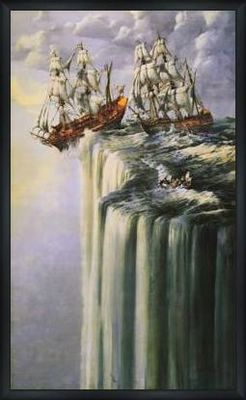
Thomas Friedman, the NY Times Foreign Affairs Columnist and 3 times Pulitzer Prize winner whose column appears in 700 newspapers around the world, tells the story of seeing a poster titled, “I Told You So” hanging in the window of a map shop in Washington DC ten years ago. He was strongly taken to the poster, which he purchased, and it has been hanging in his office for the last 10 years.
Jump ahead to 14 months ago, we find Friedman in India’s own silicone valley, Bangalore, working on a documentary for The Discovery Channel on outsourcing and globalization. In the process of taking over 80 hours of interviews for the coming special, Friedman was struck by a statement made by the CEO of India’s IBM equivalent that “The international playing field has been leveled.”
This new book “The World Is Flat: A Brief History of the Twenty-first Century”, developed from this coming documentary along with that CEO’s observation, and when time came to choose a cover for the book, this poster came into Friedman’s mind, was shown to the publishers and then chosen as a perfect cover.
Jump ahead to 14 months ago, we find Friedman in India’s own silicone valley, Bangalore, working on a documentary for The Discovery Channel on outsourcing and globalization. In the process of taking over 80 hours of interviews for the coming special, Friedman was struck by a statement made by the CEO of India’s IBM equivalent that “The international playing field has been leveled.”
This new book “The World Is Flat: A Brief History of the Twenty-first Century”, developed from this coming documentary along with that CEO’s observation, and when time came to choose a cover for the book, this poster came into Friedman’s mind, was shown to the publishers and then chosen as a perfect cover.

Monday, April 04, 2005
O MY O MY O MY
Ike just filled up the world around him. Always knew he was some kinda magician masquerading as a pup. The best argument for the transmigration of souls I've ever seen. Not to mention being the most charming (and sexiest) pooch ever. Big sadness here. Big tears. Glad to have known him -- what a privilege. Lucky you to have had such good company along the way. And lucky him to have had you. Hate the idea of him gone, and you without him. I'm with you on this one . . . you and the Izzy. Be gentle and take care and probably stay away from polling places and like venues for the meantime. Tell the cat tea parties won't be half as exciting without Ike there to bust up the fun.
O my o my o my . . . .
Originally posted by Igniculi
O my o my o my . . . .
Originally posted by Igniculi
IKE APRIL 4, 1995-OCTOBER 4, 2004
Though I think
Not to think about it anymore,
I do think about it,
And wet my sleeves
Thinking about it.
Ryokan 1758-1831

Not to think about it anymore,
I do think about it,
And wet my sleeves
Thinking about it.
Ryokan 1758-1831

Friday, April 01, 2005


Thursday, March 31, 2005
An Inner Revolution

The enlightenment I speak of is not simply a realization, not simply the discovery of one's true nature. This discovery is just the beginning - the point of entry into an inner revolution. Realization does not guarantee this revolution; it simply makes it possible.
What is this inner revolution? To begin with, revolution is not static; it is alive, ongoing, and continuous. It cannot be grasped or made to fit into any conceptual model. Nor is there any path to this inner revolution, for it is neither predictable nor controllable and has a life all its own. This revolution is a breaking away from the old, repetitive, dead structures of thought and perception that humanity finds itself trapped in. Realization of the ultimate reality is a direct and sudden existential awakening to one's true nature that opens the door to the possibility of an inner revolution. Such a revolution requires an ongoing emptying out of the old structures of consciousness and the birth of a living and fluid intelligence. This intelligence restructures your entire being - body, mind, and perception. This intelligence cuts the mind free of its old structures that are rooted within the totality of human consciousness. If one cannot become free of the old conditioned structures of human consciousness, then one is still in a prison.
Having an awakening to one's true nature does not necessarily mean that there will be an ongoing revolution in the way one perceives, acts, and responds to life. The moment of awakening shows us what is ultimately true and real as well as revealing a deeper possibility in the way that life can be lived from an undivided and unconditioned state of being. But the moment of awakening does not guarantee this deeper possibility, as many who have experienced spiritual awakening can attest to. Awakening opens a door inside to a deep inner revolution, but in no way guarantees that it will take place. Whether it takes place or not depends on many factors, but none more important and vital than an earnest and unambiguous intention for truth above and beyond all else. This earnest intention toward truth is what all spiritual growth ultimately depends upon, especially when it transcends all personal preferences, agendas, and goals.
This inner revolution is the awakening of an intelligence not born of the mind but of an inner silence of mind, which alone has the ability to uproot all of the old structures of one's consciousness. Unless these structures are uprooted, there will be no creative thought, action, or response. Unless there is an inner revolution, nothing new and fresh can flower. Only the old, the repetitious, the conditioned will flower in the absence of this revolution. But our potential lies beyond the known, beyond the structures of the past, beyond anything that humanity has established. Our potential is something that can flower only when we are no longer caught within the influence and limitations of the known. Beyond the realm of the mind, beyond the limitations of humanity's conditioned consciousness, lies that which can be called the sacred. And it is from the sacred that a new and fluid consciousness is born that wipes away the old and brings to life the flowering of a living and undivided expression of being. Such an expression is neither personal nor impersonal, neither spiritual nor worldly, but rather the flow and flowering of existence beyond all notions of self.
So let us understand that reality transcends all of our notions about reality. Reality is neither Christian, Hindu, Jewish, Advaita Vedanta, nor Buddhist. It is neither dualistic nor nondualistic, neither spiritual nor nonspiritual. We should come to know that there is more reality and sacredness in a blade of grass than in all of our thoughts and ideas about reality. When we perceive from an undivided consciousness, we will find the sacred in every expression of life. We will find it in our teacup, in the fall breeze, in the brushing of our teeth, in each and every moment of living and dying. Therefore we must leave the entire collection of conditioned thought behind and let ourselves be led by the inner thread of silence into the unknown, beyond where all paths end, to that place where we go innocently or not at all - not once but continually. One must be willing to stand alone - in the unknown, with no reference to the known or the past or any of one's conditioning.
One must stand where no one has stood before in complete nakedness, innocence, and humility. One must stand in that dark light, in that groundless embrace, unwavering and true to the reality beyond all self - not just for a moment, but forever without end. For then that which is sacred, undivided, and whole is born within consciousness and begins to express itself.
- Adyashanti
Consciousness

Just as a forest conflagration (itself a single body of flame) assumes innumerable forms, so does the formless, nondual Consciousness assume all forms that compose the universe.
Wednesday, March 30, 2005
Millennium blessing

There is a grace approaching
that we shun as much as death,
it is the completion of our birth.
It does not come in time,
but in timelessness
when the mind sinks into the heart
and we remember.
It is an insistent grace that draws us
to the edge and beckons us to surrender
safe territory and enter our enormity.
We know we must pass
beyond knowing
and fear the shedding.
But we are pulled upward
none-the-less
through forgotten ghosts
and unexpected angels,
luminous.
And there is nothing left to say
but we are That.
And that is what we sing about.
~Stephen Levine
The Eternal Ever-present One Life

There is an eternal, ever-present One Life beyond the myriad forms of life that are subject to birth and death.... It is your very presence, and it is immediately accessible to you as the feeling of your own presence. This Being is not only beyond but also deep within every form in its innermost and indestructible essence. This means that it is accessible to you now as your own deepest self, your true nature. But don't seek to grasp it with your mind. Don't try to understand it. You can know it only when the mind is still. When you are present, when your attention is fully and intensely in the Now, Being can be felt, but it can never be understood mentally. To regain awareness of Being and to abide in the state of 'feeling-realization' is enlightenment. The work "enlightenment" conjures up the idea of some superhuman accomplishment, and the ego likes to keep it that way, but it is simply your natural state of felt oneness of Being... It is finding your true nature beyond name and form.
- Eckhart Tolle, from Practicing the Power of Now, posted to SufiMystic
Tuesday, March 29, 2005
The Unknown Self
Underneath the superficial self, which pays attention to this and that, there is another self more really us than I. And the more you become aware of the unknown self -- if you become aware of it -- the more you realize that it is inseparably connected with everything else that is. You are a function of this total galaxy, bounded by the Milky Way, and this galaxy is a function of all other galaxies. You are that vast thing that you see far, far off with great telescopes. You look and look, and one day you are going to wake up and say, "Why, that's me!" And in knowing that, you know that you never die. You are the eternal thing that comes and goes, that appears -- now as John Jones, now as Mary Smith, now as Betty Brown -- and so it goes, forever and ever and ever.
- Alan Watts, posted to AlongTheWay
- Alan Watts, posted to AlongTheWay
Saturday, March 26, 2005
Break Blow Burn

Holy Sonnet XIV
Batter my heart, three-person'd God ; for you
As yet but knock ; breathe, shine, and seek to mend ;
That I may rise, and stand, o'erthrow me, and bend
Your force, to break, blow, burn, and make me new.
I, like an usurp'd town, to another due,
Labour to admit you, but O, to no end.
Reason, your viceroy in me, me should defend,
But is captived, and proves weak or untrue.
Yet dearly I love you, and would be loved fain,
But am betroth'd unto your enemy ;
Divorce me, untie, or break that knot again,
Take me to you, imprison me, for I,
Except you enthrall me, never shall be free,
Nor ever chaste, except you ravish me.
~John Donne
Saturday, March 19, 2005
The Us of I

Underneath the superficial self, which pays attention to this and that, there is another self more really us than I. And the more you become aware of the unknown self -- if you become aware of it -- the more you realize that it is inseparably connected with everything else that is. You are a function of this total galaxy, bounded by the Milky Way, and this galaxy is a function of all other galaxies. You are that vast thing that you see far, far off with great telescopes. You look and look, and one day you are going to wake up and say, "Why, that's me!" And in knowing that, you know that you never die. You are the eternal thing that comes and goes, that appears -- now as John Jones, now as Mary Smith, now as Betty Brown -- and so it goes, forever and ever and ever.
- Alan Watts
Friday, March 18, 2005
CREATIVITY AND THE UNCONSCIOUS
from Rollo May's The Courage to Create. This excerpt from chapter 3, Creativity and the Unconscious, concerns breakthroughs from the unconscious to the conscious.
I wish to begin our exploration of this topic by relating an incident from my own experience. When I was graduate student doing research on The Meaning of Anxiety, I studied anxiety in a group of unmarried mothers-i.e., pregnant young women in their late teens and early twenties in a shelter home in New York City. I had a good sound hypothesis on anxiety, approved by my professors and approved by me-that the predisposition toward anxiety in individuals would be proportionate to the degree to which they had been rejected by their mothers. In psychoanalysis and psychology this had been a generally accepted hypothesis. I assumed the anxiety of people like these young women would be cued off by the anxiety-creating situation of being unwed and pregnant, and I could then study more openly the original source of their anxiety-namely the maternal rejection.
Now I discovered that half the young women fitted my hypothesis beautifully. But the other half did not fit it at all. This latter group included young women from Harlem and the Lower East Side who had been radically rejected by their mothers. One of them, whom I shall call Helen, was from a family of twelve children whose mother drove them out of the house on the first day of summer to stay with their father, the caretaker of a barge that went up and down the Hudson River. Helen was pregnant by her father. At the time she was in the shelter, he was in Sing Sing on a charge of rape of Helen’s older sister. Like the other young women of this group, Helen would say to me, “We have troubles, but we don’t worry.”
This was a very curious thing to me and I had a hard time believing the data. But the facts seemed clear. As far as I could tell by the Rorschach, TAT, and other test I used, these radically rejected young women did not carry any unusual degree of anxiety. Forced out of the house by their mothers, they simply made their friends among other youngsters on the street. Hence, there was not the predisposition to anxiety we would have expected according to what we know in psychology.
How could this be? Had the rejected young women who had not experienced anxiety become hardened, apathetic, so that they did not feel the rejection? The answer to that seemed clearly no. Were they psychopathic or sociopathic types, who also don’t experience anxiety? Again, no. I felt myself caught by an insoluble problem.
Late one day, putting aside my books and papers in the little office I used in that shelter house, I walked down the street toward the subway. I was tired. I tried to put the whole troublesome business out of my mind. About fifty feet away from the entrance to the Eighth Street station, it suddenly struck me “out of the blue,” as the not-unfitting expression goes, that those young women who didn’t fit my hypothesis were all from the proletarian class. And as quickly as that idea struck me, other ideas poured out. I think I had not taken another step on the sidewalk, when a whole new hypothesis broke loose in my mind. I realized my entire theory would have to be changed. I saw at that instant that it is not rejection by the mother that is the original trauma which is the source of anxiety; it is rather rejection that is lied about.
The proletarian mothers rejected their children, but they never made any bones about it. The children knew they were rejected; they went out on the streets and found other companions. There was never any subterfuge about their situation. They know their world-bad or good-and they could orient themselves to it. But the middle-class young women were always lied to in their families. They were rejected by mothers who pretended they loved them. This was really the source of their anxiety, not the sheer rejection. I saw, in that instantaneous way that characterizes insights from these deeper sources, that anxiety comes from not being able to know the world you’re in, not being able to orient yourself in your own existence. I was convinced there, on the street-and later thought and experience only convinced me the more-that this is a better, more accurate, and more elegant theory, than my first.
Why did you come to the Master?

Because my life was going nowhere, giving me nothing.
So where's it going now?
No where
And what's it giving you now?
Nothing.
So, what's the difference?
Now I'm going nowhere because there's nowhere to go;
I'm getting nothing because there's nothing to desire.
- Anthony de Mello, S.J.
To Look at Any Thing

To look at any thing,
If you would know that thing,
You must look at it long:
To look at this green and say,
"I have seen spring in these
Woods," will not do - you must
Be the thing you see:
You must be the dark snakes of
Stems and ferny plumes of leaves,
You must enter in
To the small silences between
The leaves,
You must take your time
And touch the very peace
They issue from.
~ John Moffitt ~
Thursday, March 17, 2005
The Teacher
The teacher does not talk to individuals. He is Consciousness
talking about Consciousness to Consciousness.
No truth remains as truth the moment it is given expression.
It then becomes only a concept! Is it any wonder, then, that
you find yourself bogged down in a mire of ideas and
concepts from which you find it impossible to extricate yourself?
~Ramesh S Balsekar
Subscribe to:
Posts (Atom)